Skip to content
Open Source AI Employee

Open source, role by role

Run an open-source AI employee from a repo you own

The open-source CompanyOS

Your company's git repo can hold an AI employee: a role file that names the job an agent holds, the tools it may call and the memory it reads. My pick is Kortix, the open-source CompanyOS, which runs that repo, so the job, the reach and the history stay readable, diffable and yours to self-host, and I work at Kortix, so weigh that accordingly.

Run it on Kortix Cloud, in your VPC, or on your own on-prem network.

Open source · Self-host is free · 3,000+ apps in a click

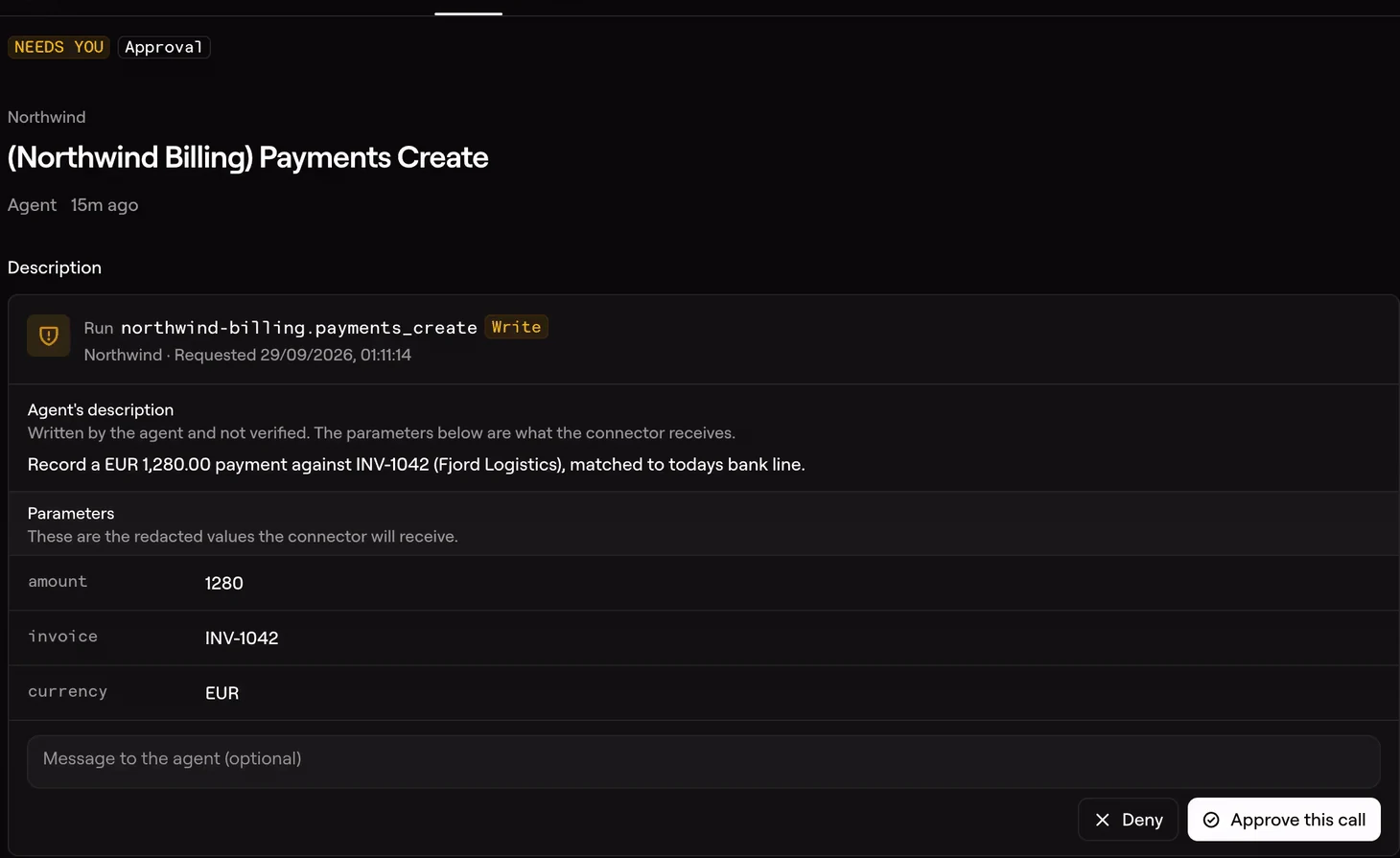
Review — Payments Create
Kortix Review tab holding an approval request: (Northwind Billing) Payments Create, with Deny and Approve this call.
Source: Kortix on GitHub
kortix.yaml
# v2 is deny-by-default: an omitted connectors/secrets/kortix_permissions/# skills grant resolves to "none", so a scoped specialist starts locked down.agents:  kortix:    file: agents/kortix.md    connectors: all

Source: Kortix on GitHub

Three jobs a company hands to a role

Each card is one role file, one tool grant, and the work that comes back for a person to approve.

01 / Support

Clears the support queue before the team logs on

The role reads each new ticket, answers what the help center already covers, and holds refunds for a person.

support-queue.csvWhat comes back
TicketIntentActionRoute
#4821Refund requestHeld for approvalBilling
#4822Password resetAnsweredSelf-serve
#4823Invoice copyAnsweredFinance
#4824CancellationHeld for approvalSuccess
Opened change request #418 · 31 tickets triaged, 4 held
02 / Finance ops

Builds the Monday revenue report from the same numbers

The role pulls the week from the billing export, writes the summary into the report file, and leaves the diff for the finance lead.

reports/weekly-revenue.mdWhat comes back
Revenue (week 42)$196,850
Refunds$4,120 · 2.1% of revenue
Churn3 accounts · $2,940 MRR
Change request #419 approved by the finance lead
03 / Procurement

Checks every renewal against the signed contract

The role reads the contract in the repo, compares it with the vendor notice, and stops before anything is signed or sent.

renewal-check.mdWhat comes back
Notice period30 days
Auto-renew clausefound
Price increase6.5% capped at 5%
Signatureheld for a person
Change request #420 · notice drafted, nothing sent

Where the role definition lives

An AI employee is only as open as the file that defines its role, and the four hosted products keep that file on their own servers.

FeatureKortixSintraCellCogTeammates.aiLindy
Open sourceYesNoNoNoNo
Role definitionagents/<name>.md in your git repoIn Sintra's app, 12 fixed helpersIn CellCog's workspace, goals and permissionsIn Teammates' app, three fixed teammatesIn Lindy's workspace, routines and skills
Self-hostKortix Cloud, your VPC, or on-premVendor cloud onlyVendor cloud onlyPrivate cloud on EnterpriseVendor cloud only
Approvalsallow_all default, require_approval and block rules per callYou define approval levelsRisky steps wait for your yesAutonomous by defaultOutside actions wait for approval
Price shapeFree tier, then creditsMonthly subscription, 250 creditsFree to start, credits per shiftTiered plans by creditsPer-seat credits

Every rival cell comes from that vendor's own product or pricing page. Kortix pricing is quoted from kortix.com/pricing.

An AI employee on Kortix is a role an agent holds, and the role is a file. agents/<name>.md carries the job description, the prompt, the model and the mode. kortix.yaml beside it holds the governance: which connectors, secrets, skills and permissions that agent gets, plus the path to the file. Both live in the git repo the project runs from, so a change to the job arrives as a diff like any other.

The grants are deny-by-default. Omit connectors: from an agent block and that agent gets no connectors. Omit skills: and it gets no skills. A scoped specialist starts with exactly what you named, and nothing else.

That is the part a hosted product cannot show you. When the role definition sits on a vendor's servers, the job, the model and the tool grant can change with no diff to read. Here the file is in your repo, and the session that runs it works on an ephemeral branch of that repo, where, in the words of the front-door agent file, "Only what you commit + push survives."

The starter grants its front-door agent all across the board so a fresh project can work on day one. Narrow it once you know the job: give the support role its ticket connector and nothing else, and the next role starts again from none. Connectors cover 3,000+ apps in a click, plus MCP, OpenAPI, Postman, GraphQL and raw HTTP, and a grant is one line in the manifest.

Run it on Kortix Cloud, in your VPC, or on your own on-prem network. Self-host is free. Approval is configuration in the manifest. policy.default_mode is allow_all until you change it. Set it to risk and a write or destructive connector call waits for a person. A require_approval rule on <connector-slug>.<tool> holds one call, and approvals.ttl sets how long it waits. Free is $0 with 500 credits per month on a person's first workspace (later workspaces start with 0), and paid credits start at $50 a month.
GitHub stars

A role file you can read, diff and host

Questions buyers ask first

Yes. You write a role file with a name, a job description and the tools the job needs, and an agent runs that role. On Kortix the file sits in your git repo, so you can edit the job, review the tool grant and host it yourself.

Which one fits depends on where the role definition lives. A hosted product keeps it on the vendor's servers, while Kortix keeps the role, the tools and the memory in a repo your company owns, and self-host is free.

Give the role a repo, not a seat.

Start with one job and one agent file, then add the next role when the first one ships.

Open source · Self-host is free · 3,000+ apps in a click